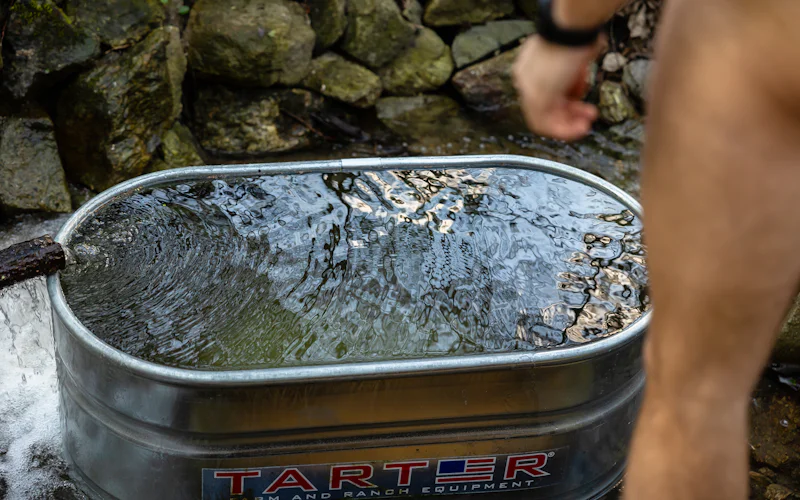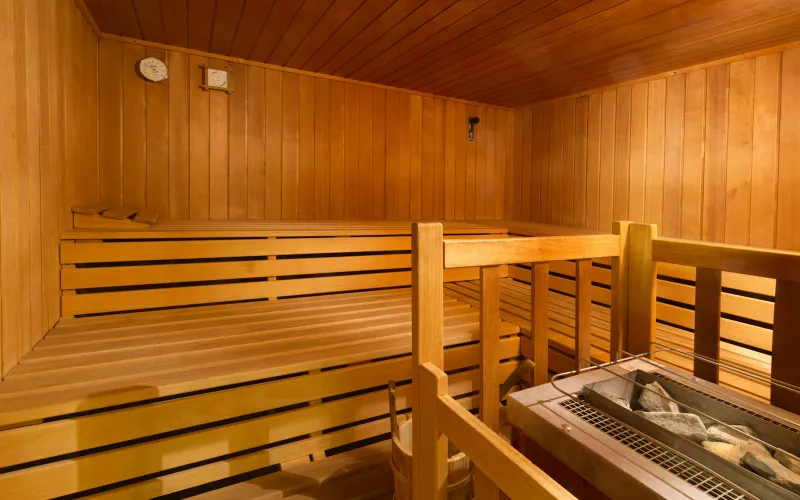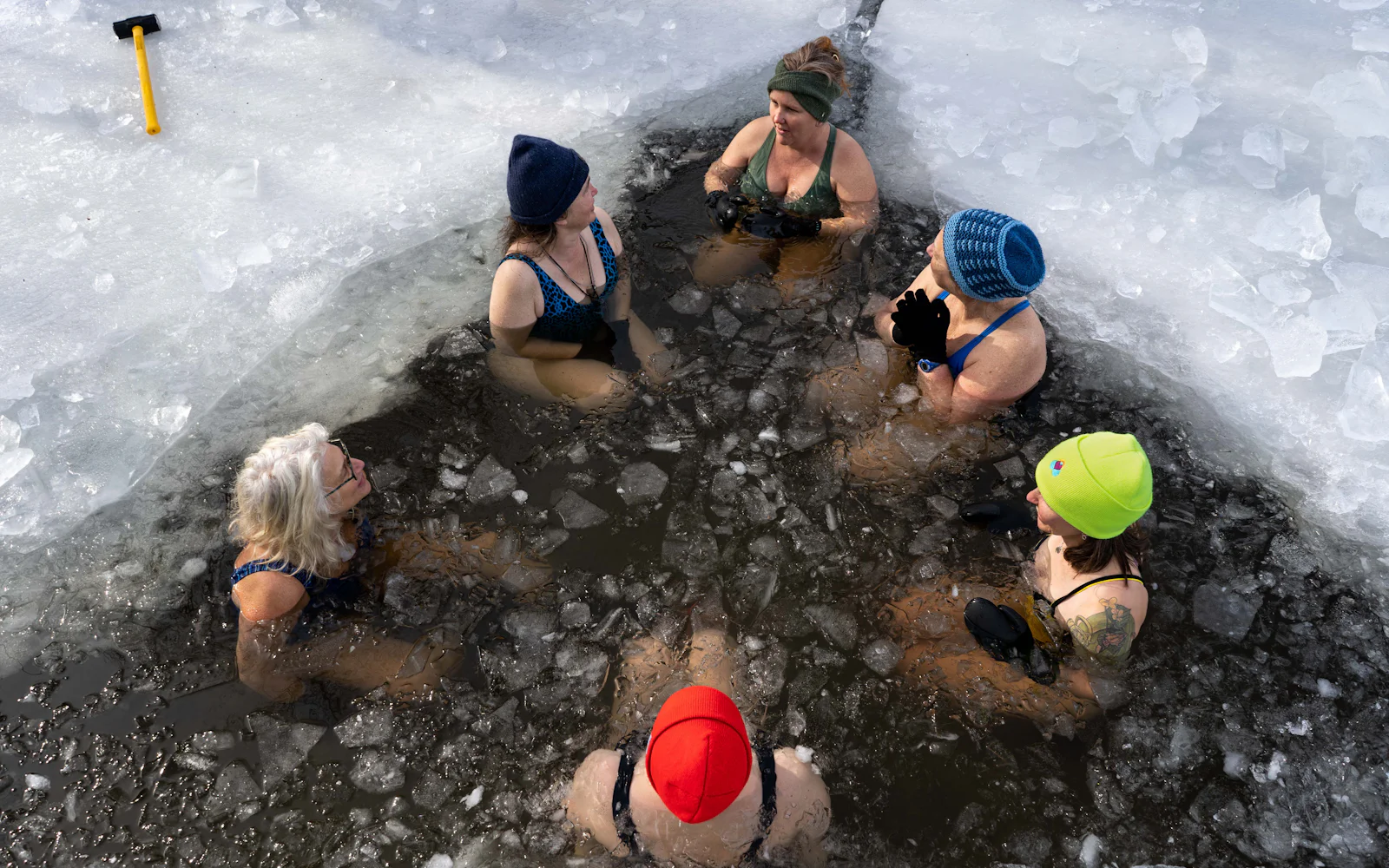
There's a moment in every hot and cold session that's hard to describe until you've felt it. You come out of the sauna glowing, step into water that's single figures, and for about ten seconds every part of you wants to get out. Then your breathing slows, the cold turns into a fizz across your skin, and when you climb out you feel more awake than you have in weeks.
Going between heat and cold, contrast therapy if you want the gym name for it, is the whole point of most Irish outdoor saunas. The heat makes the cold bearable, and the cold makes the heat feel extraordinary. This guide is how to do it well, without overdoing it.
The basic routine
Heat: 10 to 15 minutes
Sit in the sauna until you're properly warm and starting to feel ready to leave. On your first round, 8 to 10 minutes on a lower bench is plenty.
Cold: 30 seconds to 2 minutes
Walk into the plunge, the sea or the cold shower. Breathe out slowly as the water reaches your chest. Get out while you still feel in control, before any hard shivering.
Rest: 5 to 10 minutes
Sit outside or in a changing area, wrapped in a towel or robe. Let your heart rate and breathing settle completely before the next round.
Repeat 2 to 4 times
Most Irish sauna sessions are 45 to 60 minutes, which fits two or three full rounds comfortably. Don't cram in more by cutting the rest.
That's genuinely it. You don't get more out of the cold by staying in longer, and shaking uncontrollably is a sign you've gone too far, not that it's working.
| Heat | Cold | Rest | Rounds | |
|---|---|---|---|---|
| First time | 8 to 10 min | 20 to 30 sec, or a cold shower | 5 to 10 min | 2 |
| A few sessions in | 10 to 15 min | 1 min | 5 to 10 min | 3 |
| Regular | 12 to 15 min | 1 to 2 min | 5 to 10 min | 3 to 4 |
Getting through the first minute of cold
The gasp when you hit cold water is involuntary. It's called the cold shock response: a sharp intake of breath followed by fast, uncontrolled breathing and a spike in heart rate and blood pressure. It's strongest in the first minute or so and then fades. It happens to everyone, including people who've been plunging for years. They've just learned to ride it out.
- Go in slowly. Walk or lower yourself in rather than jumping. It gives your breathing a chance to catch up.
- Breathe out, long and slow. Focus on the exhale: a slow count of five or six out through your mouth. It's the quickest way to take control of the gasping.
- Keep your head out until your breathing has settled, and in open water for the whole dip unless you're an experienced swimmer.
- Hands out if it helps. Hands and feet feel the cold most. Some people keep their hands out of the water on their first few plunges.
- Pick a short target. Twenty breaths, or thirty seconds. Then get out, pleased with yourself.
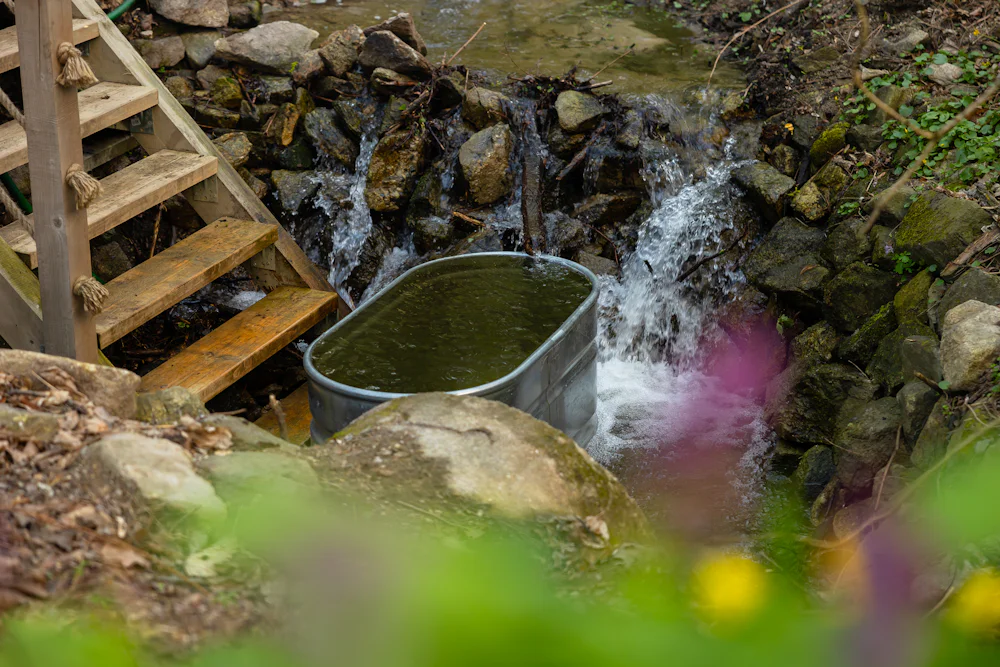
Ice bath, plunge tub or the sea?
All of them work. They just feel different, and they ask different things of you.
| Ice bath or plunge tub | The sea | |
|---|---|---|
| Temperature | Usually 3 to 10°C, set by the venue | Roughly 8 to 10°C in late winter, 14 to 17°C by late summer |
| Control | You sit still, step out whenever you like | Waves, tides, currents and slippery steps |
| Feels like | Sharp, still, intense | Bracing but moving, and often less harsh than a tub |
| Good for | Short, precise plunges year round | A dip or a short swim, plus a view |
A purpose-built plunge at 4 or 5°C is noticeably colder than the Irish sea for most of the year, so a minute in the tub is a bigger dose than a minute in the sea. The sea needs more respect for other reasons: entry and exit, swell and tide. If you're dipping in the sea between rounds, read our sea sauna safety guide first.
Lakes and rivers sit in between. Many of the lakeside and riverside saunas we list use a jetty or steps into fresh water, which tends to be colder than the sea in winter and warmer in summer.
Why the order matters
Do the sauna first. Getting properly warm makes the cold far more manageable, both mentally and physically, and it's the order every traditional sauna culture uses, from Finland to Japan. Going cold first and then into the heat isn't dangerous, but you're starting with the hardest part and nothing to look forward to.
Between rounds, the rest matters more than people think. Your heart rate and blood pressure swing up and down between hot and cold. Letting them settle before the next round is what makes the whole thing feel good rather than frantic.
How to finish: hot or cold?
There's no single right answer, and it's a popular argument in sauna circles.
- Finish on cold and you'll warm yourself back up from the inside, which most people find leaves them sharp and awake. Some cold-water researchers suggest ending on cold for exactly this reason: making your body do the rewarming itself.
- Finish with a short round of heat and you'll leave warm and relaxed, which is gentler, especially before a long drive home on a winter evening.
Whichever you choose, get dry and dressed quickly in winter. After cold water your core temperature can keep falling for 10 to 20 minutes after you get out, which is called afterdrop. It's why people sometimes feel colder in the car park than they did in the water. A warm drink, a hat and dry layers fix it.
What hot and cold does (and doesn't) do
Regulars describe feeling calmer, sleeping better and having a lift in mood that lasts the rest of the day. Those reports are consistent and they're a perfectly good reason to go. The research behind the bigger claims is more mixed. Our guide to sauna benefits goes through what's well supported and what isn't.
One point worth knowing if you train: some studies have found that regular cold water immersion straight after strength training can blunt long-term muscle and strength gains. If building muscle is your goal, keep the ice bath away from your lifting days, or leave a few hours between them.
Who should be careful
Listen to your body on the day, too. Feeling dizzy, chest pain, unusual breathlessness or numbness that doesn't pass are all signs to stop, get warm and get checked.
Where to do it
Of the saunas we list, 130 have a cold plunge or ice bath on site, and more than 100 sit right by the sea. Browse ice baths by county, filter for sea saunas, or open the map and tap "Ice baths" to see what's near you.