Plenty of people who start sea swimming in summer keep going all winter. The sea is at its coldest in late winter, though. It's usually only around 7 to 10°C, depending on where you are, and that changes what you need to bring.
This guide covers the kit that makes a winter dip more comfortable and safer, what each piece costs in Ireland, and what you can skip.
What you actually need
In rough order of importance for a winter dip:
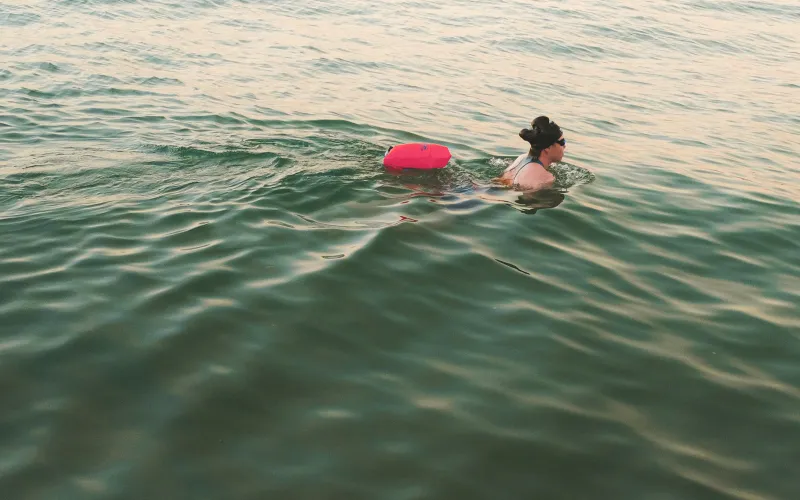
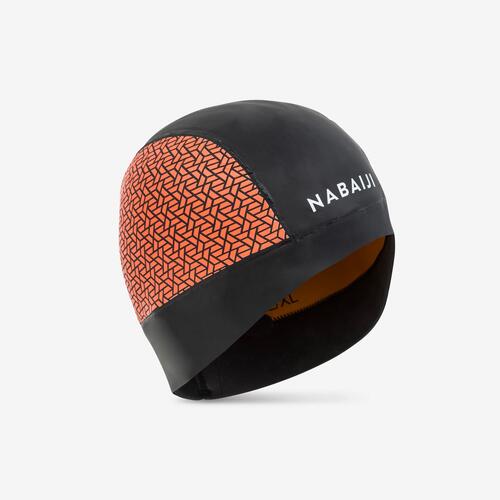
- A bright swim cap. It's the cheapest bit of safety kit you can buy: it makes your head easy to spot from the shore or a boat.
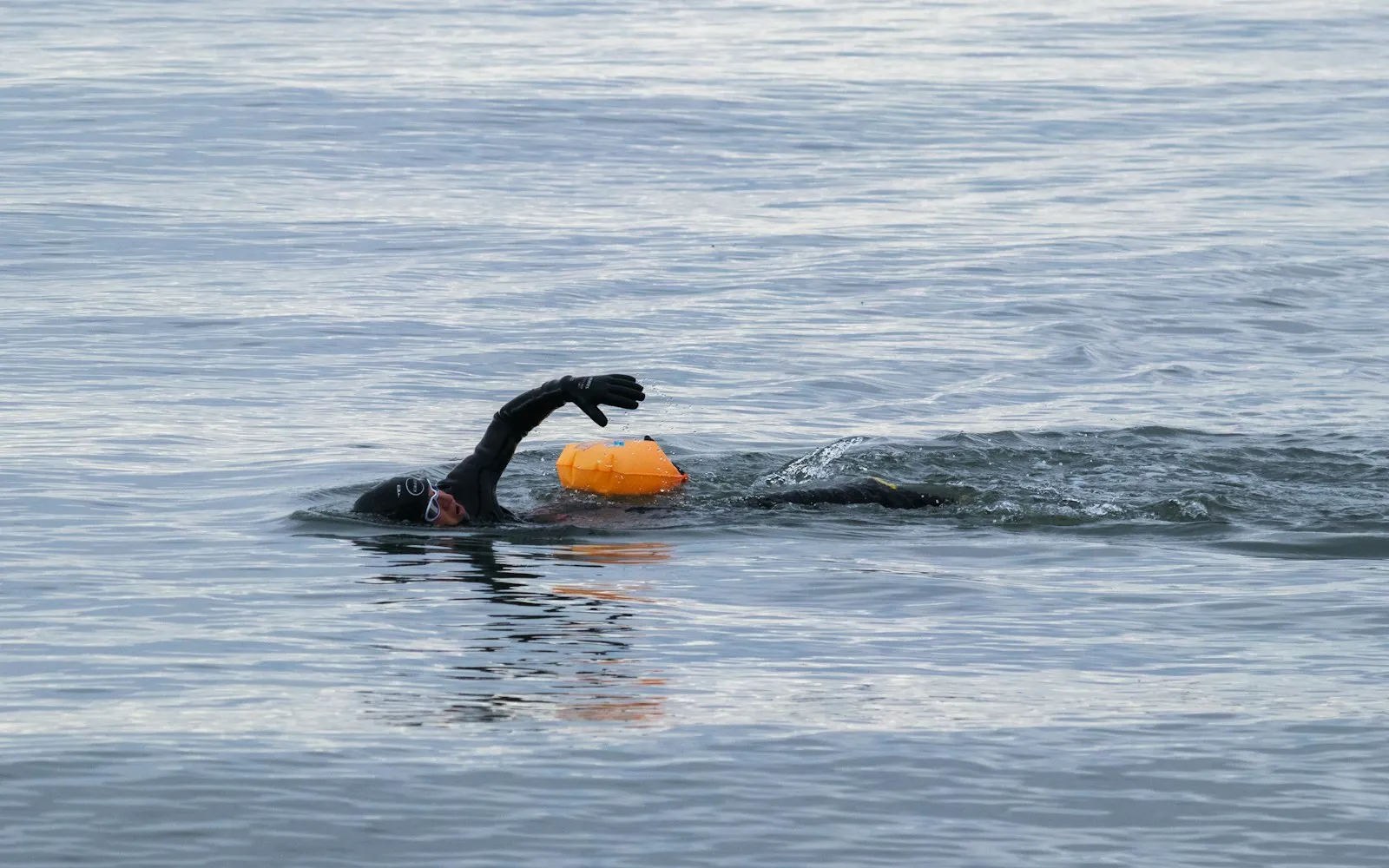
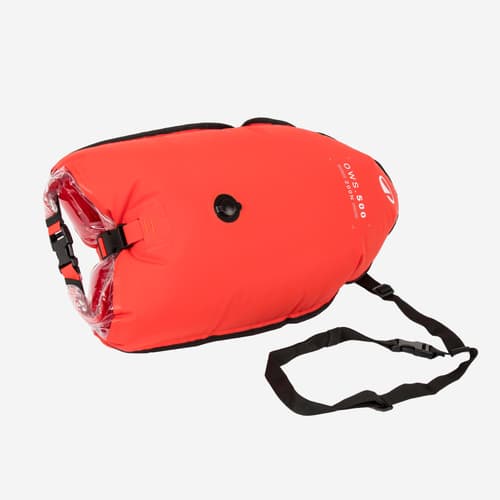
- A tow float. A bright inflatable float on a waist strap that trails behind you. Water Safety Ireland, the RNLI and the Coast Guard all recommend one.
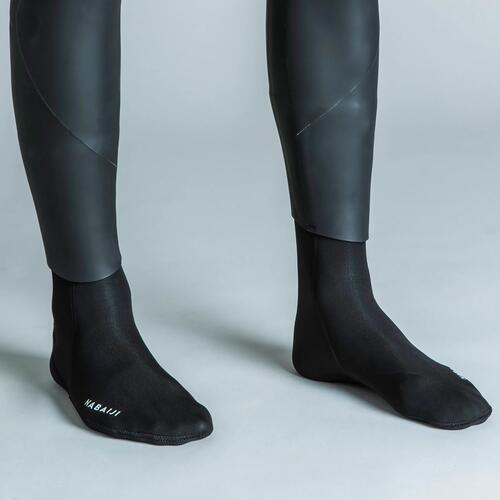
- Neoprene socks or boots. For warm feet, and grip on slippy slipways and stony beaches.
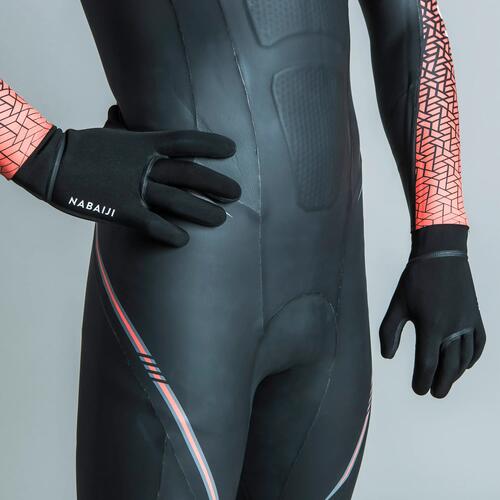
- Neoprene gloves. Hands go numb fast in cold water, which makes it hard to get dressed afterwards.
- Something warm for afterwards. A changing robe or warm layers you can get into quickly, and a hot drink.
A wetsuit is a big step up in warmth, and the RNLI suggests one for cold water. But many dippers who only stay in for a few minutes manage with socks, gloves and a hat.
What it costs in Ireland
Prices are from Surfdock, the Dublin watersports shop, on 10 November 2026. Other shops and Amazon may be cheaper or dearer, and sales are common.
| Kit | Price | What to know |
|---|---|---|
| Silicone swim cap | €6 to €11 | Surfdock's own cap, Orca and Zoggs. Pick bright orange or pink so you're easy to see. |
| Neoprene swim cap | €15 to €45 | Zone3's 4 mm cap was €15 in a sale. Orca's Hi Vis cap is €35 and its thermal cap €45. Covers your ears too. |
| Neoprene swim socks | €30 to €49 | O'Neill Heat 3 mm €30, Orca 2 mm €45 and Zone3 Heat Tech 3.5 mm €49. |
| Neoprene swim gloves | €22 to €49 | Zone3 2 mm €22 in a sale, Orca 2 mm €25, Zone3 Heat Tech 3.5 mm €30, and Orca's 3 mm men's gloves €49. |
| Tow float | €30 | Zone3's recycled tow float, with a waist leash, carry handle and reflective strips. |
| Sea shoes and swim boots | €32 to €60 | O'Neill Reactor 2 mm reef boot €32, or Zone3's Heat Tech Dura boot in 4 mm neoprene for €60. |
| Changing mat | €25 | Orca's mat, to stand on while you change instead of cold, wet ground. |
Our picks
- Best value socks: O'Neill Heat 3 mm (€30). Warm enough for most of the winter. It has no tread on the sole, so mind your step on wet slipways.
- Warmest socks: Zone3 Heat Tech 3.5 mm (€49). Thicker again, for long dips in January and February.
- Best gloves: Zone3 Heat Tech 3.5 mm (€30). Warm for the money. If you want more feel in the water, Zone3's 2 mm gloves were €22 in a sale.
- Best cap: Orca Hi Vis neoprene (€35). Keeps your head and ears warm and is easy to spot. On a budget, a €6 to €11 bright silicone cap does the visibility job.
- Tow float: Zone3 recycled (€30). A waist leash, a carry handle and reflective strips.
Swim socks and boots
Neoprene socks trap a thin layer of water against your skin that warms up, which is how all neoprene works. Thicker is warmer: 2 mm suits autumn and spring, and 3 to 4 mm is better in the depths of winter. For more pairs and prices, see our guide to the best swimming socks.
- Get a snug fit. Loose socks fill with water and flush it out, so they don't stay warm.
- Look for a grippy sole if you're getting in off a pier, slipway or rocks.
- Boots are thicker, with a tougher sole, and are better on stony or rocky beaches. Socks are lighter and easier to swim in.
Swim gloves
Gloves make a bigger difference than people expect. Numb fingers make it hard to undo zips and buttons afterwards, which is exactly when you want to get dressed fast.
- 2 mm keeps the chill off and lets you feel the water as you swim.
- 3 to 3.5 mm is warmer for long dips in the coldest months.
- Check the wrist. A strap or a longer cuff stops cold water flushing in.
Swim caps
A silicone cap is mainly for being seen, and it costs next to nothing. A neoprene cap keeps your head and ears warm, and most have a chin strap. Some swimmers wear a bright silicone cap over a neoprene one to get both. Whatever you choose, go for a bright colour: black and navy disappear against dark water.
Tow floats
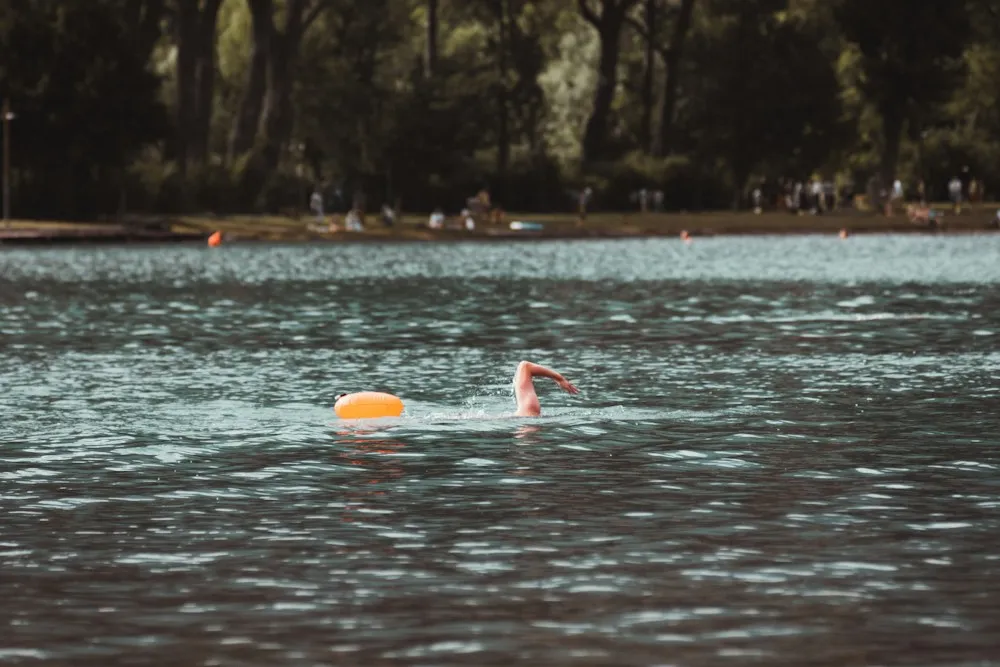
A tow float is an inflatable buoy on a leash that clips round your waist and trails behind you as you swim. You'll barely notice it in the water. For more floats and prices, see our guide to the best tow floats.
- It's mainly for visibility. It shows other water users and people on shore where you are.
- It gives you something to hold if you need a short rest.
- Many double as a dry bag, so you can bring your keys and phone in with you. For keeping your clothes dry on the beach, see our guide to the best dry bags.
- It isn't a life-saving device. Don't swim further out or in worse conditions because you have one.
After the swim
Getting warm afterwards matters as much as the swim. Your body can keep cooling for a while after you get out, so have everything ready before you go in.
- Get dry and dressed fast, starting with your top half. A changing robe makes this much easier on a windy beach.
- Layer up: a warm hat, a fleece or down jacket, and dry socks.
- Have a hot drink in a flask, and something to eat.
- Warm up gently, with a short walk or a warm drink, rather than a very hot shower straight away.
Staying safe in winter
Water Safety Ireland warns there are considerably more dangers in winter than in summer. Cold water shock can make you gasp uncontrollably as you go in, and hypothermia can set in quickly. The advice from Water Safety Ireland, the RNLI and the Coast Guard:
- Never swim alone, and tell someone where you're going.
- Know the local tides and currents, and swim where you know the water.
- Get in slowly to let your body get used to the cold. Don't jump or dive in.
- Keep it short in winter, and stay within your depth.
- If you get into trouble, Float to Live. Tilt your head back with your ears under the water, relax and breathe, and move your hands gently to stay afloat.
- In an emergency, call 112 and ask for the Coast Guard.
Our guide to sea sauna and sea swimming safety covers this in more detail, including going between the sauna and the sea.