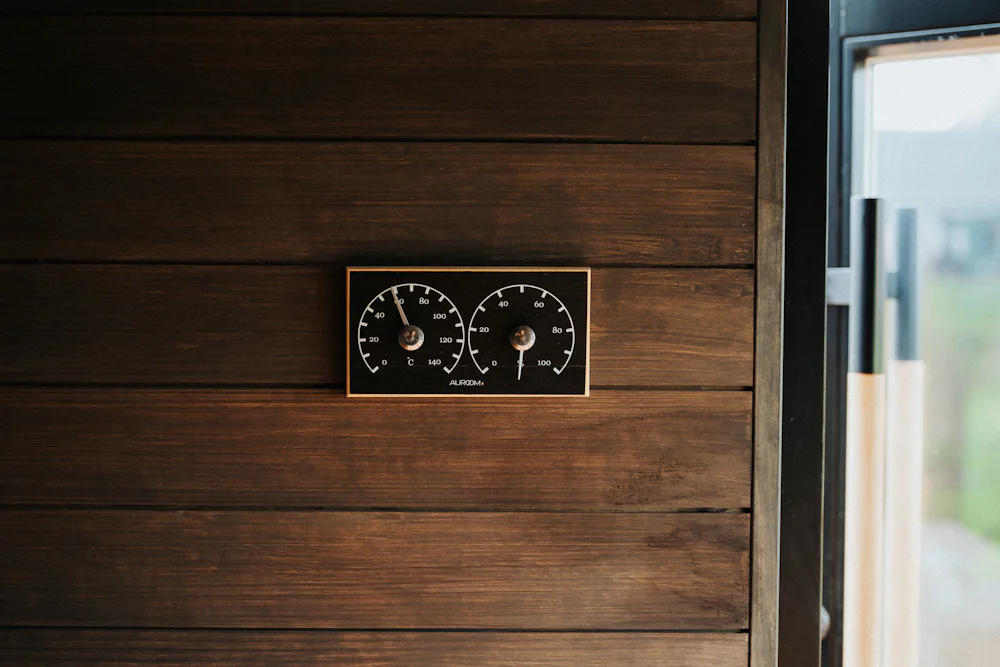
It's the first question most people ask before their first sauna, and the honest answer is: less time than you'd think, and only as long as it feels good. A traditional sauna is usually somewhere between 70 and 90°C, which is plenty hot enough to do its job in a few minutes.
Here's how long to stay in, round by round, depending on your experience, plus what changes the answer and how to know when you've had enough.
How long to stay in a sauna, at a glance
| Per round | Rounds | Rest between | |
|---|---|---|---|
| First time | 5 to 10 minutes, lower bench | 2 | 5 to 10 minutes |
| A few sessions in | 8 to 12 minutes | 2 to 3 | 5 to 10 minutes |
| Regular | 10 to 15 minutes | 3 to 4 | 5 to 10 minutes |
| Experienced, feeling good | Up to about 20 minutes | 3 to 4 | At least 5 minutes |
These are starting points, not targets. On a day when you're tired, dehydrated or the sauna is running hot, shorter is better. Most shared sessions in Ireland are 45 to 60 minutes long, which fits two or three rounds comfortably with time to cool off and rest.
Why shorter rounds work better
In the heat, your heart rate rises, your blood vessels widen to move heat to your skin, and you start to sweat. Within a few minutes most of the effect people enjoy is already happening. Staying in until you're uncomfortable doesn't add much, and it increases the chance of feeling faint when you stand up.
Several shorter rounds, with a cool-down and a proper rest in between, is how sauna is traditionally done in Finland, and it's more enjoyable than one long endurance session.
What changes how long you should stay
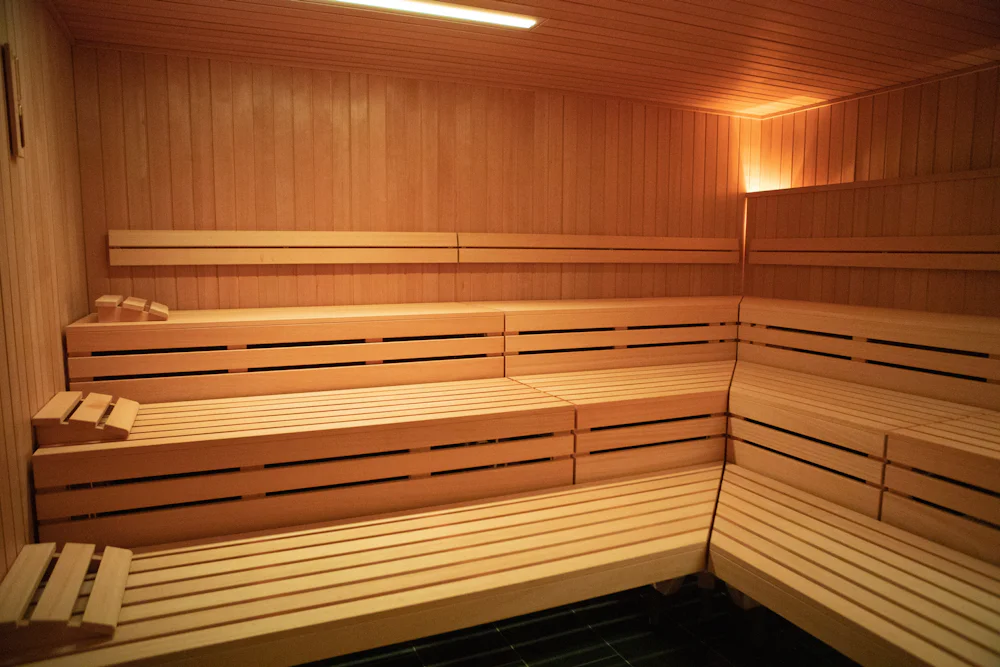
- Which bench you sit on. Heat rises. The top bench can be 15 to 20 degrees hotter than the bottom, so moving down a level is the easiest way to stay in longer comfortably.
- Steam. Water on the stones (löyly) makes the room feel much hotter for a minute or two, because humid air carries heat into your skin faster.
- The type of sauna. Wood-fired and electric saunas at the same temperature can feel different. Infrared cabins run much cooler, often 45 to 60°C, so sessions there tend to be longer.
- How you feel on the day. Tired, hungover, hungry or unwell all mean shorter rounds, or skipping it.
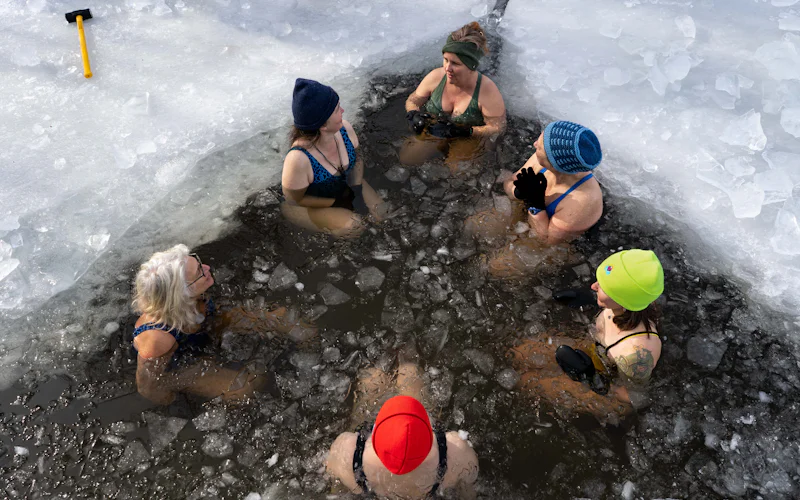
- Whether you're doing cold too. A cold plunge or sea dip between rounds resets you, so many people find they can do more rounds, not longer ones.
How long should you rest between rounds?
At least five minutes, and ten is better. Step out, cool down with a shower, a plunge or a dip in the sea, then sit somewhere calm until your breathing and heart rate settle. A lot of regulars say the rest is their favourite part. Our hot and cold routine guide covers how long to stay in the cold.
Signs it's time to get out
It's completely normal to leave after a few minutes, and nobody in a sauna is keeping score.
What the research says about longer sessions
A long-running Finnish study of more than 2,000 middle-aged men, published in 2015, looked at how often and how long they used saunas. Men whose sessions lasted around 20 minutes or more had a lower risk of fatal heart disease than those whose sessions were under about 11 minutes, and going more often was linked with lower risk too.
That's a statistical link in a population that has used saunas all their lives, not advice to stay in for 20 minutes. It's a good sign that regular sauna use can be part of a healthy life. It isn't a target, and it certainly isn't a reason to push past feeling unwell. Our guide to sauna benefits explains the research in more detail.
How often can you use a sauna?
Healthy adults can use a sauna several times a week, and in Finland many people go most days. If you're new, start with once or twice a week and see how you feel. More often is fine if you're enjoying it, sleeping well and drinking enough.
Who should be careful
Saunas are well tolerated by most healthy adults. Check with your GP first if you have a heart condition (especially unstable angina, a recent heart attack or severe aortic stenosis), low or uncontrolled blood pressure, are pregnant, or take medication that affects your heart, blood pressure or sweating. Never combine a sauna with alcohol: it raises the risk of fainting and heart rhythm problems.
Children can use saunas with care, for shorter times, at lower temperatures and always with an adult.
Your first session
If it's your first time, keep it simple: two rounds of 5 to 10 minutes on the lower bench, a cool-down, a rest, and plenty of water. Our first sauna guide covers what to wear and bring, and you can find a sauna near you on the map.